
주요 출처
핵심 답변
이 유형의 WPI 평가에서 보통 확인하는 것
고관절·무릎·다리·발목·발 영구 장해 평가는 진단명이나 영상 소견만으로 결정되지 않습니다. accepted injury, 신체 시스템, maximum medical improvement(MMI), NSW Guidelines 방법, 검사 소견, 치료·수술 기록, 기존 손상 또는 퇴행성 변화 공제 이유를 확인해야 합니다.
핵심 답변
Accepted injury
평가는 보험사가 인정했거나 다투는 부상 범위에서 시작해야 합니다. 부상 설명이 너무 좁으면 평가 방법과 증거가 어긋날 수 있습니다.
핵심 답변
의학 평가 방법
평가 의사는 NSW Guidelines와 관련 AMA5 장에 따라 MMI, 검사 소견, 기존 상태 공제, 신체 시스템을 다루어야 합니다.
핵심 답변
청구 영향
WPI 비율은 Section 66, medical expenses, weekly payments, work injury damages 전략에 영향을 줄 수 있으므로 숫자만 보아서는 안 됩니다.
평가 경로가 보통 어떻게 구성되는지
고관절·무릎·다리·발목·발 WPI 보고서는 비율만이 아니라 이유를 보여야 합니다. 그 비율에 의존하기 전에 보통 확인할 경로입니다.
Identify whether the condition is hip, knee, ankle, foot, toe, ligament, meniscus, fracture, arthritis, joint replacement, nerve 손상, vascular problem or 절단.
Choose the most specific clinically appropriate lower-limb method. The 보고서 should not automatically use gait or range of motion when a diagnosis-based or 수술-based method is more accurate.
Check whether the rating starts as lower extremity impairment, foot impairment or whole person impairment(WPI) and whether conversion is shown correctly.
Review whether methods can be combined. Gait, atrophy, strength, nerve 손상, arthritis and range-of-motion methods have combination limits.
Compare examination findings to practical duties: standing, walking, stairs, uneven ground, kneeling, squatting, driving and safe manual handling.
NSW Guidelines 및 AMA5 방법상 핵심
하지 assessment uses AMA5 Chapter 17 with NSW modifications. The assessor should choose the most specific valid method, not simply the easiest one.
The method may involve diagnosis-based estimates, range of motion, arthritis, gait, nerve 손상, 절단, joint replacement or other lower-limb tables.
The 보고서 should not use gait derangement loosely. It needs pathological support and should not be combined where the guideline or AMA5 cross-usage table does not permit it.
For hip and knee replacements, specific replacement tables and outcome factors may apply; the 보고서 should not rate the worker as if the joint had never been replaced.
Foot and ankle impairments may need regional conversion before WPI is stated. A bare WPI number can hide an error in the conversion path.
Arthritis, muscle atrophy, strength, peripheral nerve deficit and range-of-motion methods have combination restrictions. The 보고서 should explain the chosen pathway.
The maximum lower-limb rating is limited by the relevant 절단 value unless a specific method allows a different result.
하지 symptoms caused by 척추 pathology should not be rated as a separate lower-limb impairment unless the 증거 supports a distinct accepted 손상.
WPI 비율을 바꿀 수 있는 요소
최종 비율은 평가 방법, 객관적 소견, 수술 결과, 기존 상태 공제, 여러 손상의 결합 방식에 따라 달라질 수 있습니다.
- The selected lower-limb table or method and whether it is the most specific method for the accepted 손상.
- Post-operative status after arthroscopy, reconstruction, fracture fixation, fusion or replacement 수술.
- Measured movement, joint stability, deformity, arthritis grade, gait derangement and use of aids, where the method permits those factors.
- Whether lower-limb impairment or foot impairment was converted to WPI correctly.
- Whether a spinal cause, non-work arthritis or previous 손상 has been considered without over-deducting the work contribution.
평가 의사가 보통 확인하는 것
- accepted hip, knee, ankle, foot, ligament, meniscus, fracture or replacement 손상 wording
- whether imaging and 수술 records match ongoing symptoms
- movement, stability, gait, use of aids and work function
- whether arthritis or degeneration is being treated as unrelated despite work aggravation 증거
- whether multiple lower-limb problems are assessed together or separated correctly
도움이 될 수 있는 증거
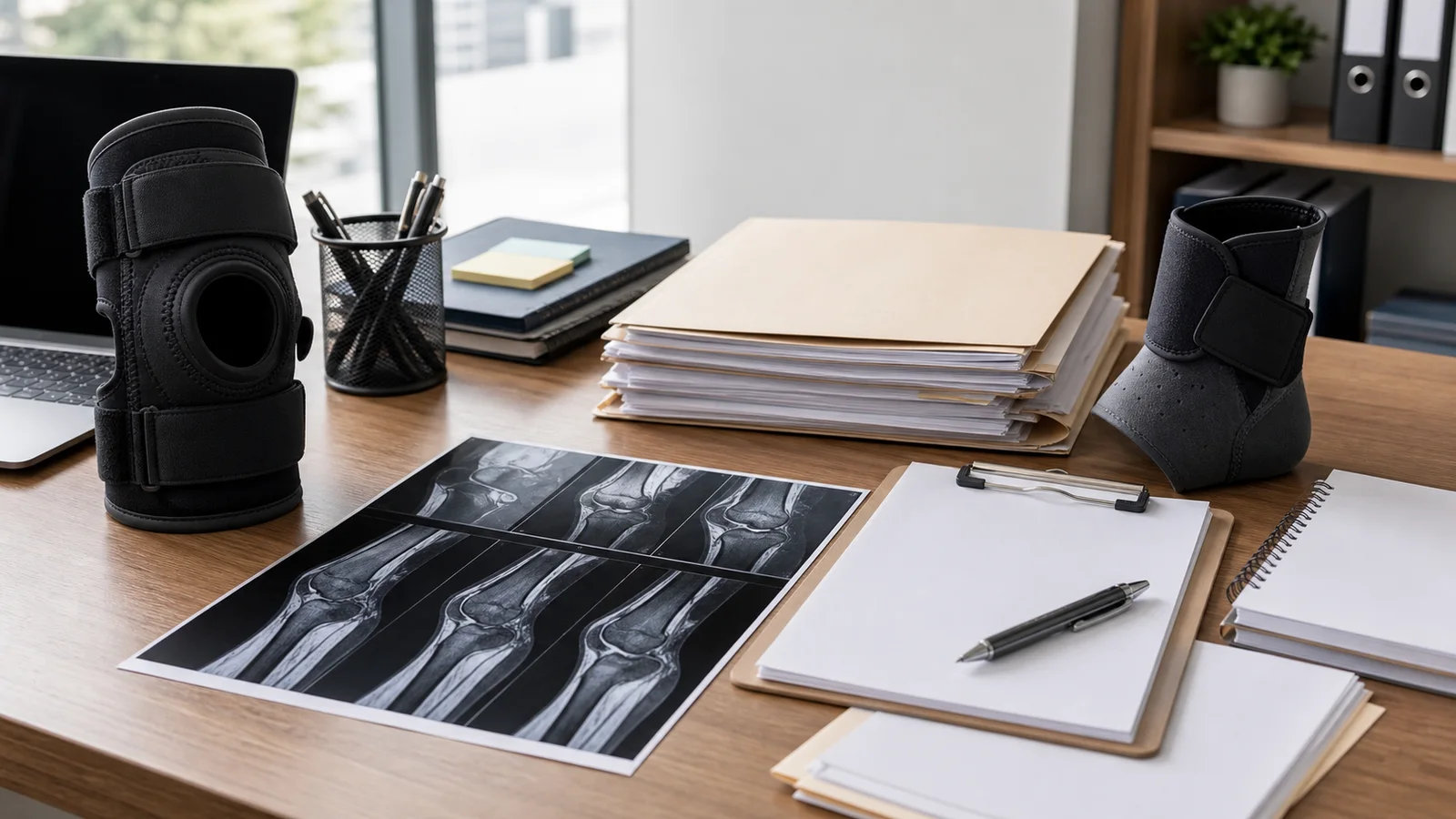
- MRI, X-ray, arthroscopy, replacement or fracture records
- orthopaedic, rehabilitation physician, physiotherapist and GP 보고서s
- capacity certificates covering walking, standing, kneeling, stairs, driving and lifting
- worksite material showing standing tasks, uneven ground, ladders, deliveries or manual handling
- records of failed suitable duties or recurrent flare-ups after return to work
보험사 또는 평가 보고서의 흔한 쟁점
- the 보험사 says arthritis is the real cause
- the assessment ignores gait, instability or repeated swelling
- 수술 outcome is described as successful even though function remains restricted
- 업무 능력 is assumed because the worker can walk short distances
- a combined 손상 is split in a way that understates overall functional effect
평가 보고서를 받은 뒤 확인할 점
WPI 보고서를 검토할 때 물어볼 질문
보고서에서 주의할 점
- A lower-limb WPI is stated without showing the regional impairment and conversion calculation.
- A worker with a knee replacement, ACL reconstruction or fracture fixation is assessed without operation notes or updated orthopaedic review.
- Gait is used as a rating method simply because the worker limps, without explaining pathology and combination limits.
- The 보고서 treats capacity to walk briefly in the examination room as proof of durable 업무 능력.
방법 및 의존 전 확인
- Did the assessor consider standing and walking tolerance?
- Were 수술 and rehabilitation records complete?
- Is the work aggravation of arthritis explained?
- Are multiple 하지 issues combined correctly?
- Does the 보고서 separate impairment from 업무 능력 properly?
- Being able to walk a short distance does not necessarily answer durable 업무 능력, but WPI and 업무 능력 remain different questions.
- A successful operation can still leave permanent impairment, but the 보고서 must explain the remaining impairment method.
- The maximum lower-limb rating is limited by the relevant 절단 value.
Section 66, weekly payments, work injury damages와의 관계
SIRA는 신체 손상의 permanent impairment compensation은 일반적으로 11% 이상, primary psychological injury는 일반적으로 15% 이상이 필요하다고 설명합니다. secondary psychological injury는 NSW에서 다르게 취급됩니다.
이 기준은 지급 보장이 아닙니다. 실제 영향은 accepted injury, 의학 증거, MMI, 평가 방법, 보험사가 그 비율을 어떻게 사용하는지에 따라 달라집니다. WPI는 Section 66 lump sum compensation, medical expenses 기간, weekly payments 전략 및 work injury damages 기준 조언에 영향을 줄 수 있습니다.
Guideline notes
- NSW lower extremity assessment modifies AMA5 Chapter 17.
- Where several methods are available, the assessor should use the most clinically accurate permitted method and explain combination rules.
자주 묻는 질문
고관절·무릎·다리·발목·발 WPI를 스스로 계산할 수 있나요?
AMA5나 온라인 표를 스스로 적용해서는 안 됩니다. WPI는 훈련받은 평가 의사가 NSW Guidelines, accepted injury, 검사 소견 및 기록에 따라 평가합니다. 다만 보고서가 올바른 방법과 자료를 사용했는지는 확인할 수 있습니다.
고관절·무릎·다리·발목·발 평가에서 MMI가 왜 중요한가요?
MMI는 영구적인 영향을 평가할 정도로 상태가 안정되었다는 뜻입니다. 치료, 수술 또는 재활로 상태가 크게 달라질 수 있으면 너무 이른 평가는 신뢰성이 떨어질 수 있습니다.
보험사 보고서가 너무 낮아 보이면 어떻게 하나요?
보고서와 평가 의사에게 보낸 자료를 확인하세요. accepted injury, 신체 시스템, 영상, 수술, 치료, 업무 제한 및 공제 이유를 대조한 뒤 분쟁 또는 추가 증거가 필요한지 판단해야 합니다.
고관절·무릎·다리·발목·발 이/가 work injury damages와 관련될 수 있나요?
관련될 수 있습니다. WPI는 기준과 전략에 영향을 줄 수 있지만 work injury damages는 negligence, past economic loss, future economic loss 및 증거 일관성을 별도로 검토해야 합니다.
일반 정보
이 정보는 일반적인 내용이며 법률 조언이 아닙니다. WPI 비율, lump sum offer 또는 보험사 결정에 의존하기 전에 본인 사정에 대한 조언을 받으세요.
Reviewed by NSW Work Injury Claims - a branch of Stephen Young Lawyers.
관련 부상 및 WPI 페이지
WPI 평가를 검토해야 하나요?
비율이 accepted injury, 치료 경과, 영상, 수술, 업무 내용 또는 현재 제한과 맞지 않으면 보험사 입장을 받아들이기 전에 보고서를 확인해야 합니다.