
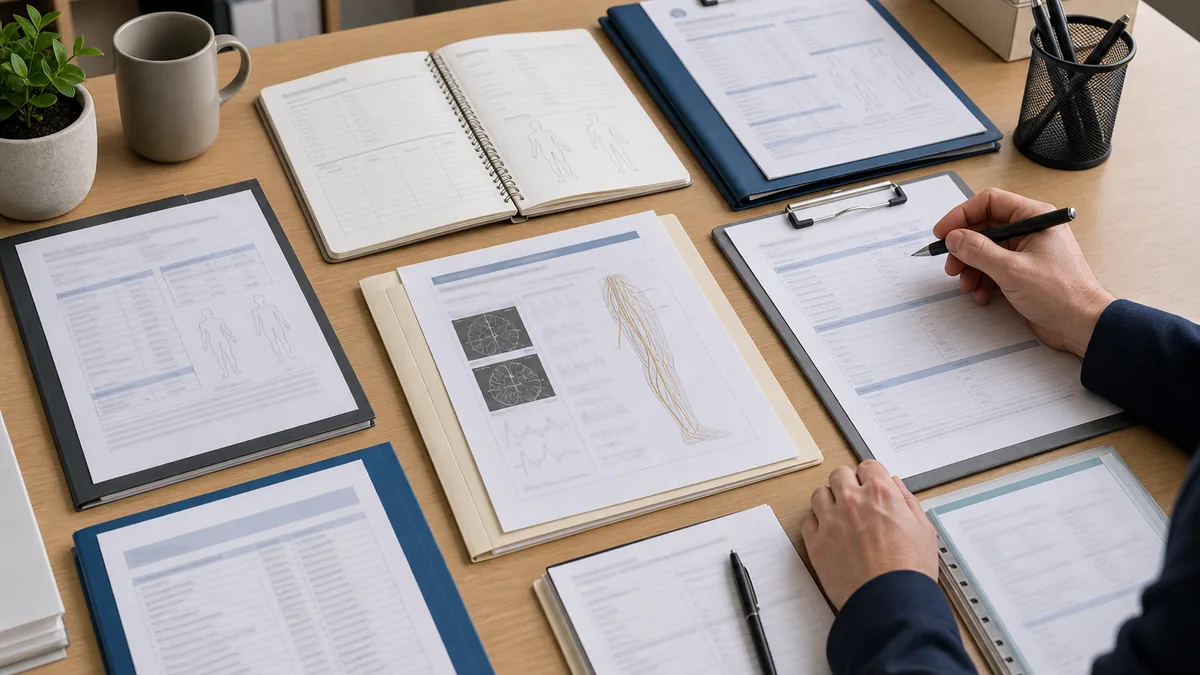
What workers need to know about CRPS in NSW
CRPS can be compensable in NSW, but insurers may dispute the diagnosis or its consequences. The main issues are usually diagnosis quality, objective signs, treatment approval, work capacity, and whether the condition is being treated as non-specific chronic pain despite CRPS findings.
- Type 1 and type 2 matter, but both still need strong clinical documentation.
- Budapest criteria should be recorded one domain at a time, not as a loose conclusion.
- General chronic pain is treated differently from established CRPS in the NSW impairment guide.
- Treatment, payments and WPI are separate questions and each needs evidence directed to its own test.
Current process
Permanent impairment assessments from 1 July 2026 to mid-2027
NSW is in an interim period. Separate examinations arranged by the worker and insurer can still occur, but an interim assessment must be performed by an assessor on SIRA's register. Liability for the injury must have been determined before an interim assessment is made.
Independent legal advice is compulsory
A worker must receive independent legal advice about the full legal implications before being seen by a permanent impairment assessor. Advice is also required before entering an impairment agreement.
The assessment can affect several entitlements
The principal assessment is used across weekly payments, medical and related treatment expenses, Section 66 lump sum compensation, commutation access and work injury damages. It is not only a lump sum calculation.
Agreement or medical dispute
If the worker and insurer agree on the degree of impairment, they may enter a written impairment agreement. If they do not agree, the insurer must give written notice and either party may refer the disagreement to the Personal Injury Commission as a medical dispute, supported by medical evidence.
A further assessment is tightly restricted
A second or later assessment during the interim period requires agreement that there appears to be unexpected and material deterioration. The deterioration must be capable of increasing the impairment by at least a further 10 percentage points. Ordinary age-related deterioration does not meet that test.
Last reviewed 20 July 2026. Sources: SIRA worker guidance and SIRA interim assessment guidance. See also the PIC dispute guide.
CRPS type 1 and type 2, explained clearly
CRPS type 1
Type 1 usually follows trauma, surgery, immobilisation, or another injury event without a clearly proven major nerve injury. Older material sometimes calls this reflex sympathetic dystrophy. In disputes, insurers often argue the condition is just prolonged pain, over-protection, or a non-specific response rather than CRPS.
CRPS type 2
Type 2 involves pain associated with confirmed nerve injury. Older material sometimes calls this causalgia. In practice, the insurer may still minimise the claim unless the nerve injury, CRPS features, and resulting functional loss are all documented in a coherent timeline.
For workers, the key point is this: type 1 versus type 2 does not replace the need for careful evidence. The file still needs clear findings, consistency over time, and a better explanation for the condition than any competing insurer theory.
The criteria, one by one
Chapter 17 of the NSW permanent impairment guide is strict. Before CRPS is assessed as CRPS, the diagnosis and impairment pathway usually need to satisfy several gatekeeping points.
1. The diagnosis should be established for at least 1 year
Short-term or evolving pain states are less likely to be accepted as stable CRPS for permanent impairment purposes.
2. More than one medical practitioner should verify the diagnosis
A single brief opinion is often not enough. Consistency across treating and examining doctors matters.
3. The worker should be at maximum medical improvement
The condition should be sufficiently stable that major change is not expected over the next year.
4. Other explanations should be ruled out
The examiner should consider whether another diagnosis better explains the signs and symptoms.
Method illustration
How a CRPS impairment calculation is built
Assume a stable upper-limb CRPS type 1 diagnosis meets every NSW diagnostic and timing requirement. Under the NSW Chapter 17 CRPS method, the assessor identifies the permitted upper-extremity measurements, including valid joint-movement impairment and the permitted sensory or pain-related extremity impairment. Those values are combined where the Guidelines allow, then converted from upper-extremity impairment to WPI through AMA5 Table 16-3. No separate AMA5 Chapter 18 pain percentage is added.
The actual result depends on the measured motion and sensory findings. This is an illustration, not an estimate. Source: NSW Guidelines Chapter 17, especially paragraphs 17.2-17.5 and Table 17.1, with the adopted AMA5 extremity conversion tables.
Budapest criteria, broken down by domain
Workers usually hear “Budapest criteria” as if it is one label. It is more useful to treat it as four separate evidence buckets. The worker reports symptoms, and the doctor should identify observable signs, one domain at a time.
1. Sensory
What workers may report: severe pain, pain out of proportion, pain from light touch, or exaggerated pain from pinprick.
What doctors may record: allodynia, hyperalgesia, or similar objective findings on examination.
2. Vasomotor
What workers may report: the limb feels hotter, colder, redder, mottled, or discoloured compared with the other side.
What doctors may record: temperature asymmetry or colour change seen at examination.
3. Sudomotor or oedema
What workers may report: swelling, clamminess, or abnormal sweating in the affected limb.
What doctors may record: visible oedema, sweating asymmetry, or other documented changes.
4. Motor or trophic
What workers may report: stiffness, tremor, weakness, loss of movement, skin change, hair change, or nail change.
What doctors may record: limited range of motion, tremor, dystonia, weakness, or trophic changes.
How CRPS WPI is assessed in NSW and the source used
NSW replaces the generic AMA5 chronic-pain approach with the method in Chapter 17 of the NSW Guidelines. For CRPS type 1, the assessor rates relevant joint range-of-motion loss and the sensory or pain impairment for the affected extremity, combines those values, and then converts the extremity result to WPI. For CRPS type 2, a specific nerve injury must be established and the method may also include measurable motor loss for that nerve.
A diagnosis or pain score does not create a fixed percentage. The condition generally needs to have existed for at least one year, be verified by more than one examining doctor, satisfy the NSW criteria and be stable enough for permanent impairment assessment. Other diagnoses that better explain the findings must be considered.
For a section 66 claim made on or after 19 June 2012, physical permanent impairment must be at least 11% WPI. Meeting the CRPS diagnostic criteria does not by itself satisfy that threshold or establish that a lump sum is payable.
NSW Guidelines, Chapter 17: CRPS assessmentWhat usually goes wrong in insurer disputes
Diagnosis language is too vague
Records talk about pain but do not clearly spell out type, signs, domains, progression, or why CRPS is a better explanation than another diagnosis.
The insurer relies on one narrow IME snapshot
A one-off examination may downplay fluctuating signs, functional limits, or the longer treatment history.
Treatment and capacity records drift apart
When the treating doctor, pain specialist, and certificates use different wording, the insurer often uses the inconsistency against the worker.
The wrong impairment method is assumed
CRPS is sometimes treated as generic chronic pain. The report should instead identify whether the NSW CRPS criteria and the type 1 or type 2 assessment method are met.
How to prepare for a CRPS assessment
- Keep one consistent timeline covering the original injury, onset of symptoms, treatment steps, and work impact.
- Ask treating doctors to record the actual CRPS signs, not just general pain complaints.
- Make sure temperature, colour, swelling, allodynia, hyperalgesia, range-of-motion loss, and trophic change are documented when present.
- Collect insurer denials, Section 78 notices, IME reports, and responses in one place.
- Explain daily functional limits concretely, for example dressing, showering, driving, sleep, concentration, grip, standing, walking, or weight-bearing.
- If treatment or work capacity is also disputed, keep those decisions and their evidence separate from the permanent impairment assessment.
Why this CRPS guide is structured this way
CRPS claims often become confusing because diagnosis, treatment approval, weekly payments, work capacity and permanent impairment evidence can all move at once. This page is structured to separate those issues, explain the evidence that usually matters, and connect the reader to related treatment, IME, weekly-payments, section 66 and PIC pathways without overstating likely outcomes.
FAQs
What is the difference between CRPS type 1 and type 2?
CRPS type 1 usually follows trauma without a clearly proven major nerve injury. CRPS type 2 involves pain following confirmed nerve injury. In either case, NSW workers compensation disputes still turn on objective clinical signs, a consistent timeline, and whether the diagnosis is well documented by more than one doctor.
How do the Budapest criteria work in a NSW CRPS claim?
The criteria are used to support the diagnosis. The worker must report symptoms, and the examining doctor must observe signs, across sensory, vasomotor, sudomotor or oedema, and motor or trophic domains. The diagnosis should also be more likely than other explanations.
Can CRPS be assessed separately from general chronic pain in NSW?
Sometimes yes. The NSW permanent impairment guide is strict about chronic pain. General pain complaints are usually not rated separately, but CRPS can be assessed where the condition is established and the required clinical signs are documented.
What evidence usually matters most in a CRPS dispute?
Workers usually need a clear injury timeline, treating and specialist reports, consistent Certificates of Capacity, records of temperature or colour change, swelling, allodynia or hyperalgesia, treatment history, and a direct response to any insurer IME that minimises the diagnosis.
Why does WPI matter in a CRPS claim?
A section 66 claim requires a permanent impairment assessment under the NSW CRPS method. That assessment is separate from decisions about weekly payments or treatment, and it should not be assumed from the diagnosis alone.
Last legally reviewed: 26 July 2026. Reviewed by NSW Work Injury Claims.