
Legal service provider
NSW workers compensation help from Stephen Young Lawyers
NSW Work Injury Claim is the workers compensation service of Stephen Young Lawyers. Stephen Young Lawyers provides the legal service. Stephen Young Lawyers.
Stephen Young Lawyers was established in 2012. The firm is led by Stephen Young, Principal Solicitor and Accredited Specialist in Personal Injury Law.
Workers across New South Wales can arrange telephone or video appointments. In-person appointments can be arranged at the Sydney office when appropriate.
NSW Work Injury Claim enquiries: (02) 7233 3661
- Content publisher:
- NSW Work Injury Claim
- Published:
- Last legally reviewed:
Key legal sources
- Workers Compensation Act 1987 (NSW)
- SIRA workers compensation
- IRO legal assistance for injured workers
- Personal Injury Commission
This information is general in nature and is not legal advice. You should obtain advice about your own circumstances.
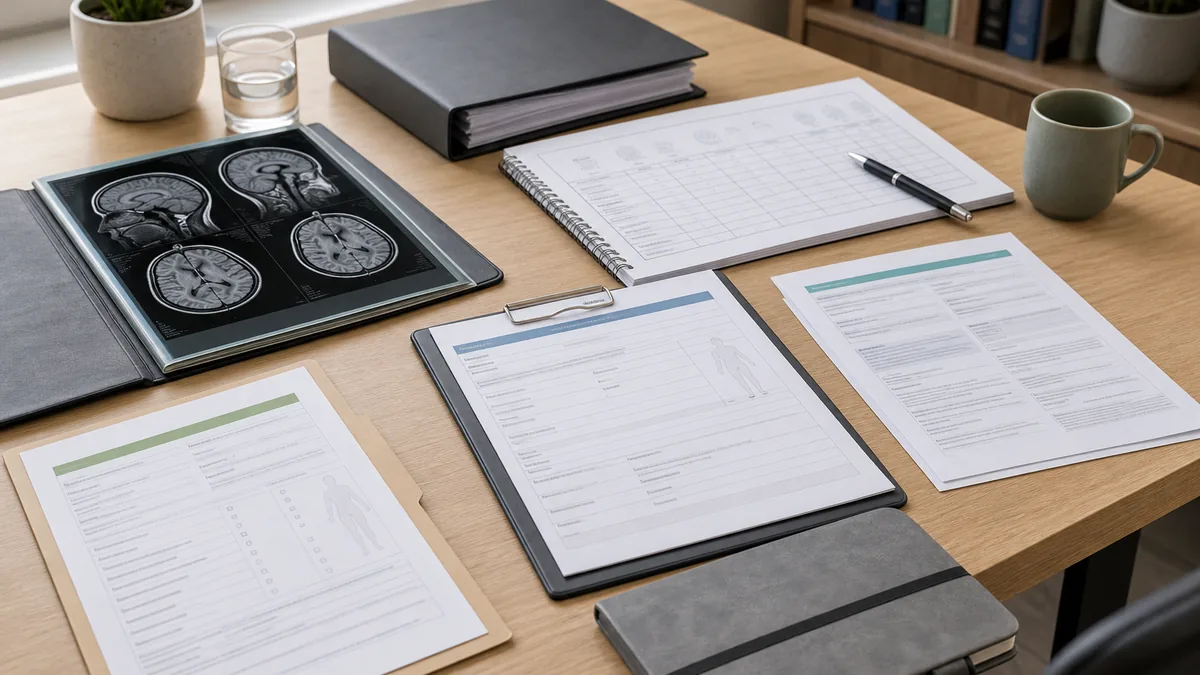
Assessment overview
How this assessment usually works
Neurological WPI is assessed by the permanently affected function, not by a diagnosis or scan label alone. Brain, spinal cord, spinal nerve-root and peripheral nerve injuries follow different methods. For cerebral injury, NSW requires supported impairment of consciousness, cognition, communication and neurologically based emotion or behaviour to be evaluated and combined without counting the same loss twice.
For head, brain and neurological, the assessor gives a medical opinion about permanent impairment under the NSW workers compensation guidelines; the assessor does not decide legal liability. Once the body-system method and percentage are understood, separate advice may be needed about Section 66 compensation, weekly payments, medical-expense time limits or work injury damages.
Injuries and diagnoses assessed in this body system
The referral and report should identify the accepted diagnosis precisely. Similar symptoms can use different assessment methods depending on the injured structure.
- traumatic brain injury with permanent disturbance of consciousness, cognition, communication, neurological emotion or behaviour, movement or another cerebral function
- cranial nerve injury affecting functions such as facial sensation or movement, swallowing, shoulder movement, smell, taste or vision
- spinal cord, corticospinal or cauda equina injury affecting gait, limbs, breathing, bladder, bowel or sexual function
- spinal nerve-root injury assessed through the NSW spine method, including objectively verified radiculopathy
- peripheral nerve injury causing anatomically localised sensory loss, motor loss or both
- episodic neurological impairment such as recurrent seizures, and stable station, gait or movement disorders
When a permanent impairment assessment can occur
For head, brain and neurological, assessment should occur only after maximum medical improvement (MMI). Under NSW Guidelines paragraph 1.15, that means the condition is well stabilised and unlikely to change substantially during the next year, with or without treatment.
For head, brain and neurological, if treatment or rehabilitation is inadequate and could materially change the impairment, paragraph 1.16 says the assessment should be deferred. The report should explain the timing rather than merely state that MMI has been reached.
The NSW and AMA5 assessment method
The NSW Workers Compensation Guidelines prevail over AMA5 wherever the two differ. The method is a medical assessment framework, not a self-scoring exercise.
NSW Guidelines Chapter 5 applies AMA5 Chapter 13 subject to NSW modifications. The NSW Guidelines prevail where the two differ.
A brain impairment is assessed by the function that has been permanently lost, not by the words “concussion” or “brain injury” alone. The four cerebral categories are consciousness and awareness; mental status, cognition and highest integrative function; aphasia and communication; and emotional or behavioural impairment arising from verifiable neurological injury.
For a traumatic brain injury rating in those cerebral categories, NSW paragraph 5.9 requires evidence of a severe or high-energy head impact and at least one significant medically verified finding: an abnormal Glasgow Coma Scale score, a significant duration of post-traumatic amnesia, or intracranial pathology on CT or MRI. Neuropsychological results are considered with the history, examination and imaging, not in isolation.
AMA5 ordinarily retains only the most severe cerebral category. NSW paragraph 5.4 changes that rule: the assessor evaluates all four cerebral categories, avoids rating the same loss twice, and combines the supported values with the Combined Values Chart. The resulting cerebral value may then be combined with distinct neurological impairments identified in AMA5 Table 13-1.
Mental status and integrative function uses AMA5 Tables 13-5 and 13-6. It considers memory first, then orientation, judgment and problem solving, community affairs, home and hobbies, and personal care. Language impairment uses Table 13-7 and considers both comprehension and expression.
Neurological emotional or behavioural impairment under AMA5 Table 13-8 requires a verifiable neurological basis, such as established head or brain injury. It is not the NSW PIRS method. Primary psychiatric impairment is assessed separately under NSW Chapter 11, and secondary psychiatric impairment is not assessed for WPI.
Spinal cord injury is assessed under AMA5 Chapter 15 Table 15-6 as directed by NSW paragraph 5.2, then combined with the corresponding cervical, thoracic or lumbar DRE value. A spinal nerve root is different: radiculopathy is considered through the NSW Chapter 4 spine DRE method. An arm or leg peripheral nerve uses the relevant extremity nerve method.
What the assessor actually measures
For head, brain and neurological, the percentage should be traceable to relevant, stable and reproducible findings.
- persistence and day-to-day effect of altered consciousness or awareness, including recurrent episodic events
- memory, orientation, judgment and problem solving, community functioning, home activities and personal care under the Clinical Dementia Rating framework
- spoken and written comprehension, word finding, grammar, intelligibility and ability to express needs or ideas
- neurologically based emotional or behavioural change, with care taken not to count the same cognitive loss twice
- station, gait, coordination, movement disorder, upper- and lower-limb function and any need for assistance
- cranial nerve function, including the relevant sensory, motor, visual, swallowing, smell or taste deficit
- for a peripheral nerve, the sensory-deficit grade and motor-deficit grade in the nerve distribution, followed by the maximum value assigned to that nerve
- objective spinal cord, cauda equina, bilateral nerve-root or lumbosacral plexus evidence where bladder, bowel or sexual dysfunction is alleged
How the measurements are converted to WPI
The assessor first derives a value for each supported cerebral category under the applicable AMA5 table. Under NSW paragraph 5.4 those cerebral values are combined, not reduced to the single highest category, provided overlap is removed.
The same dependence, supervision need or loss of initiative must not be counted once as cognitive impairment and again as behavioural impairment. The report should identify the distinct functional loss supporting each retained category before combination.
Other distinct neurological losses, such as cranial nerve, gait, extremity function, spinal cord or peripheral nerve impairment, may then be combined where AMA5 Table 13-1 and the NSW modifications permit it. The same functional loss cannot be rated twice.
For peripheral nerves, the assessed sensory-deficit percentage is multiplied by the nerve’s maximum sensory value and the assessed motor-deficit percentage is multiplied by its maximum motor value. Those regional values are combined and then converted from upper- or lower-extremity impairment to WPI.
For spinal cord injury, the applicable Table 15-6 functional values are selected and combined with the corresponding regional spinal DRE value as NSW paragraph 5.2 requires.
Where an applicable neurological table supplies a range, NSW paragraph 5.8 requires the assessor to select a specific value from the complete clinical circumstances and all available information.
Verified category and table examples
These short examples show how the published method works. They do not predict an individual assessment.
| Finding or category | Published value or method | Source |
|---|---|---|
| NSW cerebral impairment rule | Evaluate and combine all four supported cerebral categories | NSW Guidelines paragraph 5.4 |
| Clinical Dementia Rating of 2 | AMA5 Table 13-6 Class 3: 30-49% WPI | AMA5 Tables 13-5 and 13-6; supplied Chapter 13 explanatory example |
| Communication impairment, Class 3 | 25-39% WPI | AMA5 Table 13-7; supplied Chapter 13 explanatory example |
| Total loss of smell or taste | Maximum 5% WPI for total loss of either sense | NSW Guidelines paragraph 5.11 |
| Miscellaneous peripheral nerve with sensory loss only | 1% WPI in the anatomical distribution | NSW Guidelines Table 5.1 |
| Miscellaneous peripheral nerve with severe neurogenic pain and sensory alteration | 4-5% WPI in the anatomical distribution | NSW Guidelines Table 5.1 |
Worked illustrations
How the assessment method can operate
These paraphrased illustrations explain the published method. They are not estimates of another worker's WPI.
Illustration: TBI affecting memory, judgment and independent function
Assumed findings: A worker with a medically verified traumatic brain injury has moderate memory loss scored 1, severe disorientation scored 2, frequently impaired judgment scored 2, inability to function independently in the community scored 2, ability to perform only simple home tasks scored 2 and a need for prompting with personal care scored 1.
Method and arithmetic: Under AMA5 Table 13-5, memory is the primary category. Four of the five secondary categories are scored above memory, so the Clinical Dementia Rating is 2. AMA5 Table 13-6 places CDR 2 in Class 3, a 30-49% WPI range. The assessor selects the exact value from the need for supervision and mental-function effect on daily activities.
What the illustration shows: The result follows from the structured cognitive and functional findings, not the TBI label alone. This paraphrased example illustrates the method and is not an estimate for another worker.
Method source: AMA5 Tables 13-5 and 13-6, method and example paraphrased from the supplied Chapter 13 medical-legal companion; NSW paragraphs 5.4 and 5.9 control the NSW use of the result.
Illustration: communication impairment after head injury
Assumed findings: After a verified head injury, a worker’s spoken expression is not intelligible enough to communicate needs and the worker understands only non-verbal communication.
Method and arithmetic: AMA5 Table 13-7 considers comprehension and expression. Both findings meet the supplied example’s Class 3 description, producing a Class 3 range of 25-39% WPI before the assessor selects a value supported by the full clinical evidence.
What the illustration shows: The class reflects severe language comprehension and expression loss. Word-finding difficulty or frustration alone would not establish the same class. This is an illustration, not a predicted outcome.
Method source: AMA5 Table 13-7, example paraphrased from the supplied Chapter 13 medical-legal companion; NSW paragraphs 5.4 and 5.9 apply.
Illustration: recurring seizure disorder
Assumed findings: A worker has medically documented recurrent seizures occurring about monthly and the episodes interfere with some daily activities and safety-sensitive tasks.
Method and arithmetic: The supplied AMA5 Chapter 13 example classifies this pattern as Class 2 under Table 13-3. The exact percentage must be selected from the controlling Table 13-3 criteria by reference to frequency, treatment and interference with daily activities; this site does not infer a range that has not been verified from the controlling table.
What the illustration shows: A seizure diagnosis or one isolated event is not enough. Recurrence and demonstrated interference with daily life drive the class. This is an illustration, not an estimate.
Method source: AMA5 Table 13-3, method and example paraphrased from the supplied Chapter 13 medical-legal companion; NSW paragraph 5.8 governs selection within a range.
Illustration: partial sensory and motor loss in the axillary nerve
Assumed findings: A stable axillary nerve injury is clinically graded as a 40% sensory deficit and a 60% motor deficit, with the findings following the nerve distribution.
Method and arithmetic: AMA5 Table 16-15 gives maximum axillary nerve values of 5% upper-extremity impairment for sensory loss and 35% for motor loss. Forty per cent of 5% gives 2% UEI; 60% of 35% gives 21% UEI. The Combined Values Chart rounds 21 combined with 2 to 23% UEI. AMA5 Table 16-3 converts 23% UEI to 14% WPI.
What the illustration shows: The calculation depends on the clinically assigned deficit grades and the correct nerve maximum. Numbness, weakness or an EMG result alone does not supply the final percentage. This is an illustration, not a predicted outcome.
Method source: AMA5 Tables 13-23, 13-24, 16-15 and 16-3 and the Combined Values Chart; NSW paragraphs 1.26, 2.8 and 5.3 govern rounding, regional conversion and the peripheral nerve method.
What does not establish WPI by itself
These matters can remain medically and practically important, but they do not replace the measurements or category requirements in the applicable method.
- a concussion, TBI, seizure or nerve-injury diagnosis without permanent functional loss measured under the applicable method
- an abnormal MRI or CT finding without clinical findings and function that match it
- headache, dizziness, pain, numbness or radiating pain without the objective findings required by the applicable category
- self-reported memory or concentration difficulty without clinical assessment and, where available, appropriately contextualised neuropsychological testing
- EMG or nerve-conduction results that do not match the examination and anatomical distribution
- bladder, bowel or sexual symptoms without objective evidence of the required neurological lesion and causal connection
- depression or anxiety counted as neurological behaviour without a verifiable neurological basis, or PIRS mixed into a cerebral calculation
Evidence checklist
The assessor should receive enough material to test the accepted injury, stability, measurable impairment and any deduction.
- the accepted injury description, claim history and any insurer liability decisions
- contemporaneous GP and treating-specialist records
- relevant imaging, pathology, operation reports and rehabilitation records
- earlier impairment assessments and records about any pre-existing impairment
- a current treatment history and an explanation of whether further material improvement is expected
- ambulance, emergency and hospital records recording the impact, Glasgow Coma Scale, post-traumatic amnesia and acute neurological findings
- CT/MRI and neurology or rehabilitation reports that identify the lesion and connect it to the examination
- formal neuropsychological assessment by an appropriately qualified clinical neuropsychologist where cognition is in issue
- speech pathology, occupational therapy, gait, vestibular and functional assessments where relevant
- seizure history, medication, witness accounts and treating-neurologist records showing frequency and daily-life interference
- sensory mapping, muscle testing, reflexes, atrophy and EMG/NCS material for nerve injury, interpreted together
- urology, colorectal, continence or sexual-function specialist evidence and objective testing where neurogenic organ dysfunction is alleged
Common insurer or report disputes
A disagreement about head, brain and neurological WPI may concern the accepted diagnosis, the body-system findings, the selected method, a deduction or the way another impairment was handled. The report should identify the disputed step rather than leave the percentage unexplained.
- the report rates the diagnosis or scan instead of the permanent function
- one or more supported cerebral categories are omitted contrary to the NSW combination rule
- the same cognitive or behavioural loss is counted twice
- radiating pain is treated as radiculopathy without the required objective nerve-root findings
- an EMG/NCS result is relied on despite not matching the examination and anatomy
- primary psychiatric PIRS or secondary psychological symptoms are mixed into neurological WPI
- assessment occurs before neurological recovery and treatment have stabilised
Report cautions before relying on the percentage
Report red flags
- The report says “concussion resolved” without dealing with ongoing vestibular, cognitive, sleep or neurological records.
- Cognitive impairment is mixed with depression, pain medication or poor sleep without explaining the difference.
- Peripheral nerve symptoms are discussed without identifying the nerve, sensory/motor findings or relevant body-system chapter.
- The report keeps only the highest cerebral category without addressing the NSW paragraph 5.4 modification.
- A seizure diagnosis is rated without documenting recurrence, treatment and interference with daily activities.
- The report uses a work-capacity conclusion as if it were the WPI method.
Method and reliance checks
- Does the report separate neurological impairment from psychological symptoms and work-capacity opinion?
- Were early hospital records, neurology reports, neuropsychology reports or vestibular records available?
- Does it explain fatigue, dizziness, concentration and safety limits with reference to clinical findings?
- Is the impairment stable enough for assessment?
- Does the report explain why a peripheral nerve problem is rated in Chapter 13 or in an extremity chapter?
- If cognition is assessed, does the report explain testing, reliability and functional translation rather than simply repeating complaints?
- If several cerebral categories are affected, does the report apply NSW paragraph 5.4 and explain how overlap was removed before combination?
- Concussion and post-concussion symptoms can be complex; the report should not rely only on a brief examination snapshot.
- Cognitive symptoms can overlap with pain, medication, poor sleep and psychological distress, so the medical reasoning matters.
- Driving, heights, machinery and screen tolerance may be work-capacity issues even where the WPI number is modest.
Guideline notes
- NSW Guidelines Chapter 5 modifies AMA5 Chapter 13, including the cerebral combination rule and TBI evidence gateway.
- Peripheral nervous-system assessment uses the relevant upper-extremity, lower-extremity or spine chapter; spinal cord injury uses AMA5 Chapter 15 Table 15-6 as directed by NSW paragraph 5.2.
Sources for this assessment guide
The public NSW Guidelines control where they modify AMA5. AMA5 table references below identify the method without reproducing the proprietary table in full.
- NSW Guidelines Chapter 5, paragraphs 5.1-5.16 and Table 5.1: NSW cerebral combination rule, TBI evidence gateway, spinal cord, cranial nerve and miscellaneous peripheral nerve modifications.
- NSW Guidelines Chapter 4, paragraphs 4.20-4.29: imaging, cauda equina and objective radiculopathy requirements for spinal nerve-root injury.
- AMA5 Chapter 13, Tables 13-1 to 13-8, 13-15 to 13-24: cerebral, communication, episodic, gait, movement, cranial and peripheral nervous-system methods, subject to NSW modifications.
- AMA5 Chapter 15, Table 15-6: spinal cord and associated bladder, bowel and sexual function as directed by NSW paragraphs 5.2 and 5.6.
- Supplied Chapter 13 medical-legal companion: secondary explanation of the AMA5 calculation examples; examples are paraphrased and the controlling NSW Guidelines prevail.
Questions to ask when the report comes back
These questions help identify whether the report explains its method and evidence. They do not replace medical or legal advice about the particular assessment.
- Did the report identify the exact neurological structure and function?
- Did it cite the applicable NSW paragraph and AMA5 table or class?
- Were all four cerebral categories considered where brain injury is assessed?
- Are the clinical findings consistent with the imaging and specialist evidence?
- Is each calculation traceable from deficit grade or functional class to WPI?
- Are neurological and psychiatric assessment pathways kept separate?
How this connects to thresholds and strategy
In a head, brain and neurological claim, SIRA's permanent impairment thresholds must be applied to the accepted injury and the supported body-system percentage. The general thresholds are 11% or more permanent impairment for physical injury and 15% or more for primary psychological injury; secondary psychological injury is treated differently. A threshold is an eligibility checkpoint, not a promised payment.
A low head, brain and neurological WPI opinion may affect weekly-payment planning, treatment time-limit issues, dispute posture and whether work injury damages threshold advice is required. Before the opinion is relied on, check the relevant measurements, body-system method, deduction and practical consequences.
Questions workers often ask
Does NSW keep only the highest cerebral impairment category?
No. Although the base AMA5 approach keeps only the most severe cerebral category, NSW Guidelines paragraph 5.4 requires supported impairment of consciousness, cognition, communication and neurologically based emotion or behaviour to be evaluated and combined. The assessor must remove overlap and avoid double-rating.
Does an abnormal brain scan establish neurological WPI?
No. The method assesses permanent neurological function. For TBI, NSW paragraph 5.9 also requires the specified clinical evidence, such as a significant verified Glasgow Coma Scale abnormality, significant post-traumatic amnesia or significant intracranial pathology, together with the overall clinical assessment.
Is a peripheral nerve injury assessed like radiculopathy?
No. An arm or leg peripheral nerve uses the relevant extremity sensory and motor method. Radiculopathy concerns a spinal nerve root and is assessed through the NSW spine DRE method, which requires objective clinical findings rather than radiating pain alone.
How are sensory and motor nerve deficits converted?
The assessor grades sensory and motor loss, multiplies each deficit percentage by the maximum value for the affected nerve, combines the resulting regional impairments and then converts the extremity value to WPI.
Can seizures or gait impairment be assessed?
They can be considered where there is a stable, medically supported neurological condition and the relevant functional criteria are met. Frequency, need for assistance and interference with daily activities matter more than the diagnosis label alone.
Can bladder, bowel or sexual dysfunction be included?
Only where the applicable method is satisfied and objective evidence links the dysfunction to spinal cord, cauda equina, bilateral nerve-root or lumbosacral plexus injury, or another specifically permitted neurological cause.
General information only
This information is general in nature and is not legal advice. You should obtain advice about your own circumstances before relying on a WPI percentage, accepting a lump sum offer, or responding to an insurer decision.
Published by NSW Work Injury Claim, the workers compensation service of Stephen Young Lawyers.
Related injury and impairment pages
- Head injury
- Concussion
- Traumatic brain injury
- Vestibular injury
- Seizure disorder
- Cranial nerve injury
- Spinal cord injury
- Peripheral nerve injury
- Sciatica and radiculopathy
- Neurogenic bladder, bowel and sexual dysfunction
- WPI assessment guide
- AMA5 and NSW permanent impairment guide
- Section 66 lump sum guide
- Lump sum WPI service
- Work injury damages
- Free claim check
Need a WPI assessment checked?
If the percentage does not match the accepted injury, treatment history, imaging, surgery, work duties or current restrictions, get the report checked before accepting the insurer position.