
Key References & Legislation
- Workers Compensation Act 1987
- Workplace Injury Management and Workers Compensation Act 1998
- SIRA workers compensation guidelines
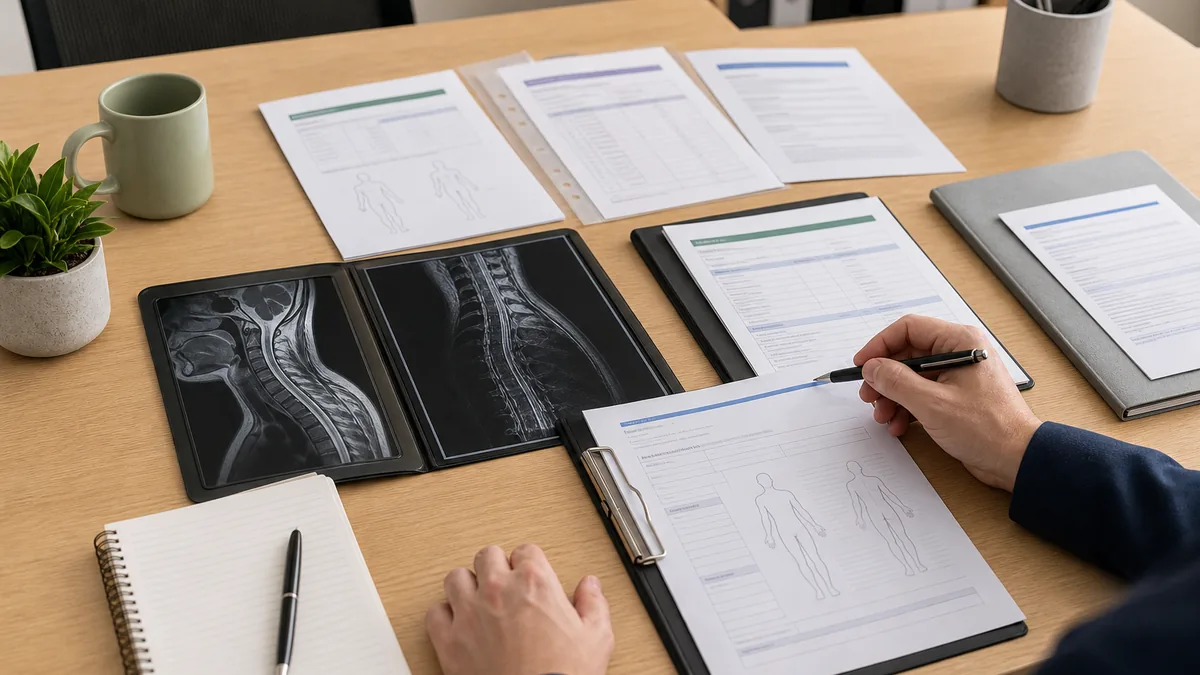
Quick answer for NSW injured workers
A NSW workers compensation claim for upper back injury usually turns on the work connection, the current medical evidence, certificates of capacity, safe duties and the exact insurer decision in dispute. Start by checking the chronology, treatment records, capacity certificates and any Section 78 notice or work capacity decision before responding.
Plain English summary
A NSW workers compensation claim for upper back injury usually needs more than a diagnosis. The useful question is how the injury is connected to the work, what the current medical evidence says, how the condition affects safe duties, and which insurer decision is actually in dispute. This page explains the evidence and common issues in cautious, practical terms.
General information only. It is not legal advice for your individual matter, and past outcomes do not guarantee future results.
How this injury commonly happens at work
- lifting or carrying loads
- repetitive bending, twisting or reaching
- falls, slips or awkward movements
- driving, vibration or prolonged sitting
- manual handling under time pressure
Evidence that may help
- early GP notes and certificates of capacity
- MRI, CT, X-ray or specialist reports
- physiotherapy or rehabilitation notes showing functional limits
- incident reports, witness details and task descriptions
- records of changed duties, flare-ups or failed return-to-work attempts
Common insurer disputes
- whether work caused or materially aggravated the condition
- whether imaging is described as degenerative only
- whether restrictions are accepted as genuine work capacity limits
- whether surgery or injections are reasonably necessary
- whether ongoing symptoms match the clinical findings
Treatment and surgery issues
- physiotherapy, exercise rehabilitation and pain management
- specialist referral, injections or surgical opinion where clinically supported
- medication side effects and safe work restrictions
- post-surgery or post-injection rehabilitation planning
Weekly payments and work capacity
- lifting, bending, sitting, standing, driving and shift tolerance
- suitable duties that avoid repeated aggravation
- capacity certificates that match the actual job demands
- weekly payment decisions based on realistic work ability
Permanent impairment and lump sum issues
- WPI may be relevant where the condition becomes stable and permanent
- spinal impairment often depends on diagnosis, objective signs, imaging and surgical history
- a WPI pathway should be planned carefully and not assumed from pain alone
How NSW Work Injury Claim can help
- identify the exact disputed issue before responding
- organise medical, imaging and work-task evidence
- check weekly payment and work capacity decisions
- consider treatment, WPI and dispute options where the evidence supports them
Common questions about upper back injury claims
Can I make a NSW workers compensation claim for upper back injury?
A claim may be available if the upper back injury arose out of work or was materially aggravated by work. The answer depends on the medical evidence, work history, notice evidence, certificates of capacity and any insurer decision already made.
What evidence usually matters most for upper back injury?
Helpful evidence usually includes early GP notes and certificates of capacity, MRI, CT, X-ray or specialist reports, physiotherapy or rehabilitation notes showing functional limits and incident reports, witness details and task descriptions. The best evidence depends on the diagnosis and the dispute raised by the insurer.
What if the insurer says the upper back injury is not work-related?
The response should address the specific reason given, such as degeneration, non-work causes, insufficient incident evidence, exposure history or inconsistent symptoms. A broad complaint is usually less useful than a short evidence-based chronology.
Can treatment or surgery for upper back injury be disputed?
Yes. Treatment may be disputed on causation, necessity, timing or whether conservative care has been tried. A treating specialist report explaining why the treatment is reasonably necessary can be important, but approval is never guaranteed.
Can upper back injury affect weekly payments or suitable duties?
It can, depending on certificates of capacity and the real demands of the job. Duties should be tested against the actual restrictions, not just a generic light-duties label. Weekly payments may turn on whether capacity has been assessed correctly.
Can upper back injury lead to a permanent impairment or lump sum claim?
It may, if the injury becomes stable and the medical evidence supports a permanent impairment assessment. WPI results, thresholds and entitlement depend on the accepted injury, objective findings and correct assessment process.
Request a calm claim position review
If you have received an insurer decision or you are unsure how your injury evidence fits together, we can help you identify the issue, organise the documents and consider the next step. Where ILARS funding is approved, eligible legal costs and necessary disbursements may be covered.