
Workers compensation case note
Warrumbungle Shire Council v Xu [2026] NSWPICPD 13: psychological injury, misperception, and proving work causation
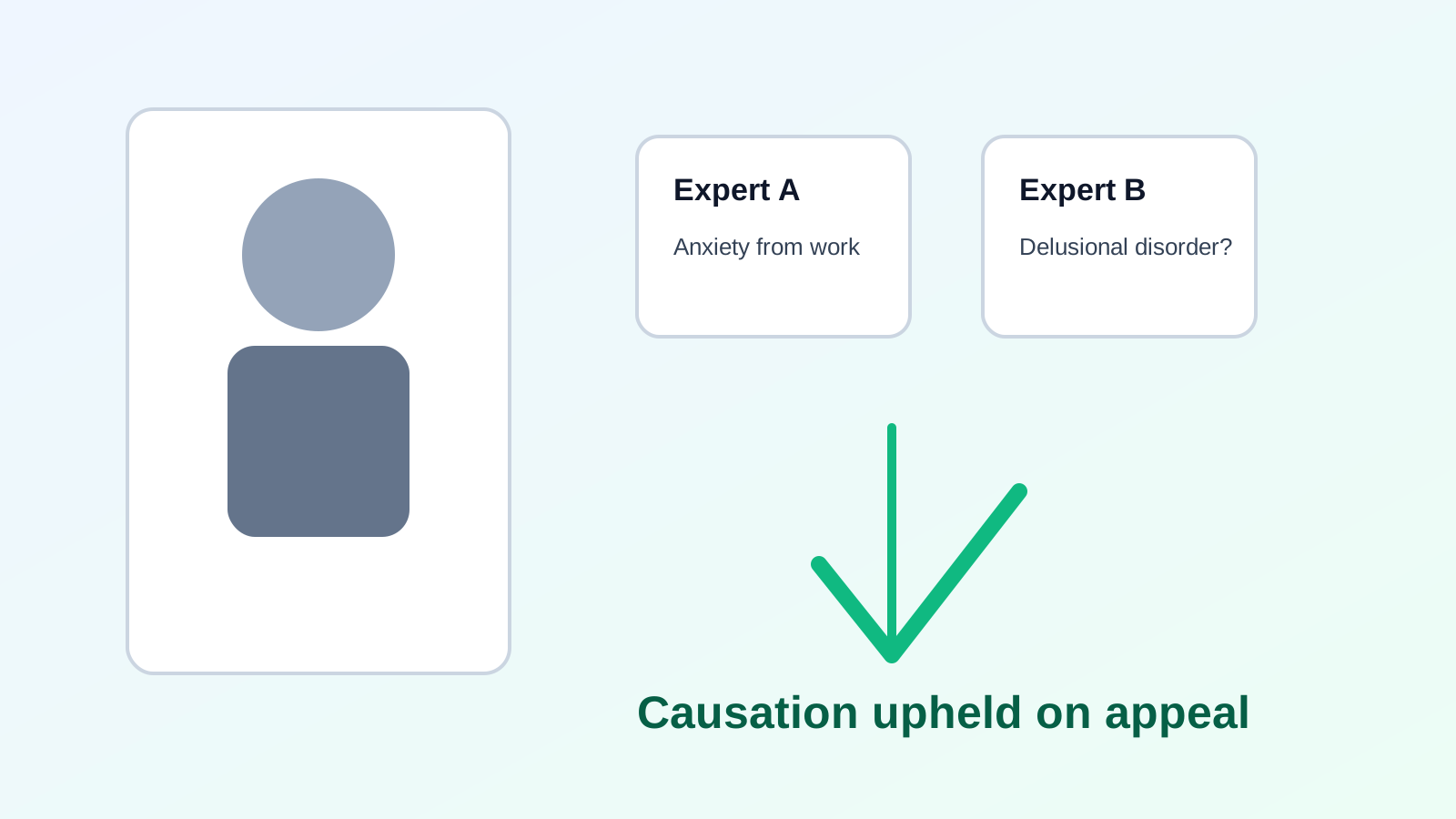
Warrumbungle Shire Council v Xu [2026] NSWPICPD 13 is a useful claimant-side decision in psychological injury litigation. The employer argued the worker’s account was implausible, misperceived, or even delusional. The Presidential appeal still confirmed the original decision that the worker had suffered a compensable psychological disease injury.
General information only. This case note is not legal advice.
Introduction
Xu matters because psychological injury claims are often fought on two fronts at once: what actually happened at work, and whether the worker’s psychiatric presentation means the employer can dismiss their account as unreliable or misperceived. This appeal confirms that those arguments have to be analysed carefully, with proper reasons, not just asserted.
Case overview
- Forum: Personal Injury Commission of NSW, Presidential Member
- Decision date: 1 April 2026
- Decision-maker: Acting Deputy President Sweeney
- Citation: Warrumbungle Shire Council v Xu [2026] NSWPICPD 13
- Dispute type: Psychological injury causation, disease injury under section 4, perception/misperception arguments, section 11A defence at first instance
Background facts
Ms Xu was employed as a water project engineer on probation. Her time in the role was short and, on the evidence, extremely difficult. There were repeated signs of distress at work, a formal grievance against her supervisor, ongoing medical attendances for work-related stress, and eventual cessation of work followed by relocation to Melbourne.
It was common ground that she was suffering from a psychological illness. The real fight was about cause. The employer argued that her allegations of bullying and harassment were disputed, that work was not the main contributing factor, and that the case was better explained by paranoid or delusional thinking rather than a hostile work environment.
What was in dispute?
The employer challenged the Member’s reasoning on causation. It argued the Member had applied the wrong test concerning the worker’s perception, and had failed to engage adequately with the employer’s submission that the worker’s account was implausible or driven by endogenous psychiatric illness rather than workplace events.
That issue matters in a lot of NSW psychological injury claims. Insurers often say some or all of the worker’s account was exaggerated, inaccurate, or misperceived. Xu is useful because it shows how the Commission should approach that kind of argument when there is competing psychiatric and lay evidence.
The decision
Acting Deputy President Sweeney confirmed the Certificate of Determination. The appeal court accepted that the Member’s reasons were brief, but held they were still adequate in context. The Member had identified the competing psychiatric opinions, recognised the weaknesses in the worker’s expert evidence, and explained why he preferred the worker’s causation case overall.
Importantly, the Presidential decision applied authority including Attorney General v K and emphasised that perception issues do not remove the need to decide the real causation question on the evidence. The Member was entitled to conclude the worker had been in an environment where she perceived she was being targeted, had communication difficulties, and had not been adequately supported from early in her employment.
Why the case matters
Xu is not a blanket win for all psychological injury claims. What it does do is reinforce several practical points for claimant-side work. First, a worker’s case does not automatically fail because an employer labels their account "delusional" or "misperceived". Second, treating and expert psychiatric evidence still has to be read with the factual context, including early clinical records and workplace witness material. Third, reasons only need to be adequate, not perfect.
That makes Xu a useful companion to our guides on section 11A psychological injury denials, claim denied disputes, and the PIC disputes process.
What to be aware of
- Early GP, psychologist and psychiatrist notes can be decisive, especially where they show distress close to the events in issue.
- Where there are language or communication difficulties, the tribunal may give weight to clinicians who had a better ability to communicate with the worker over time.
- An employer can still run strong causation and section 11A defences, but it must do more than simply assert that the worker imagined the problem.
- Xu is still fact-sensitive. It should be used carefully, not overstated as a complete answer to every perception argument.
Key takeaways
- Misperception arguments do not automatically defeat psychological injury causation.
- The Commission must engage with both factual and psychiatric evidence.
- Brief reasons may still be legally adequate if they address the real issues.
- Workers should preserve early clinical notes, grievance records and witness material where psychological injury is in dispute.
Related reading and internal links
Related guidance includes our practical pages on section 11A psychological injury, psychological injury claims, responding to a section 78 notice, and what to do when liability is denied.
Schema suggestions
This case note suits BlogPosting, WebPage and FAQ schema, with breadcrumb schema also appropriate for the wider case-note library.
Frequently asked questions
Does Xu mean a worker always wins if they genuinely felt targeted?
No. The case is not that broad. It shows the Commission must analyse the evidence properly and cannot shortcut causation by relying on a bare misperception argument.
Why is this helpful for section 11A disputes?
Because causation, factual accuracy and alleged management action often overlap. Xu shows why chronology, records and psychiatric evidence matter before those issues harden.
Full decision source
Read the decision on AustLII: Warrumbungle Shire Council v Xu [2026] NSWPICPD 13.
Related pages
Need help with a psychological injury denial?
If the insurer is saying you imagined events, overreacted, or cannot prove work causation, get the records mapped properly before the case drifts.