
Workers compensation case note
Brown v Toll Transport [2026] NSWPICPD 12: when a workers compensation appeal fails the monetary threshold
Brown v Toll Transport Pty Ltd [2026] NSWPICPD 12 is a practical warning about appeals in NSW workers compensation matters. The worker had succeeded on weekly payments for accepted injuries, but his appeal about a separate primary psychological finding was dismissed because it did not put a real amount of compensation in issue on the appeal.
General information only. This case note is not legal advice.
Introduction
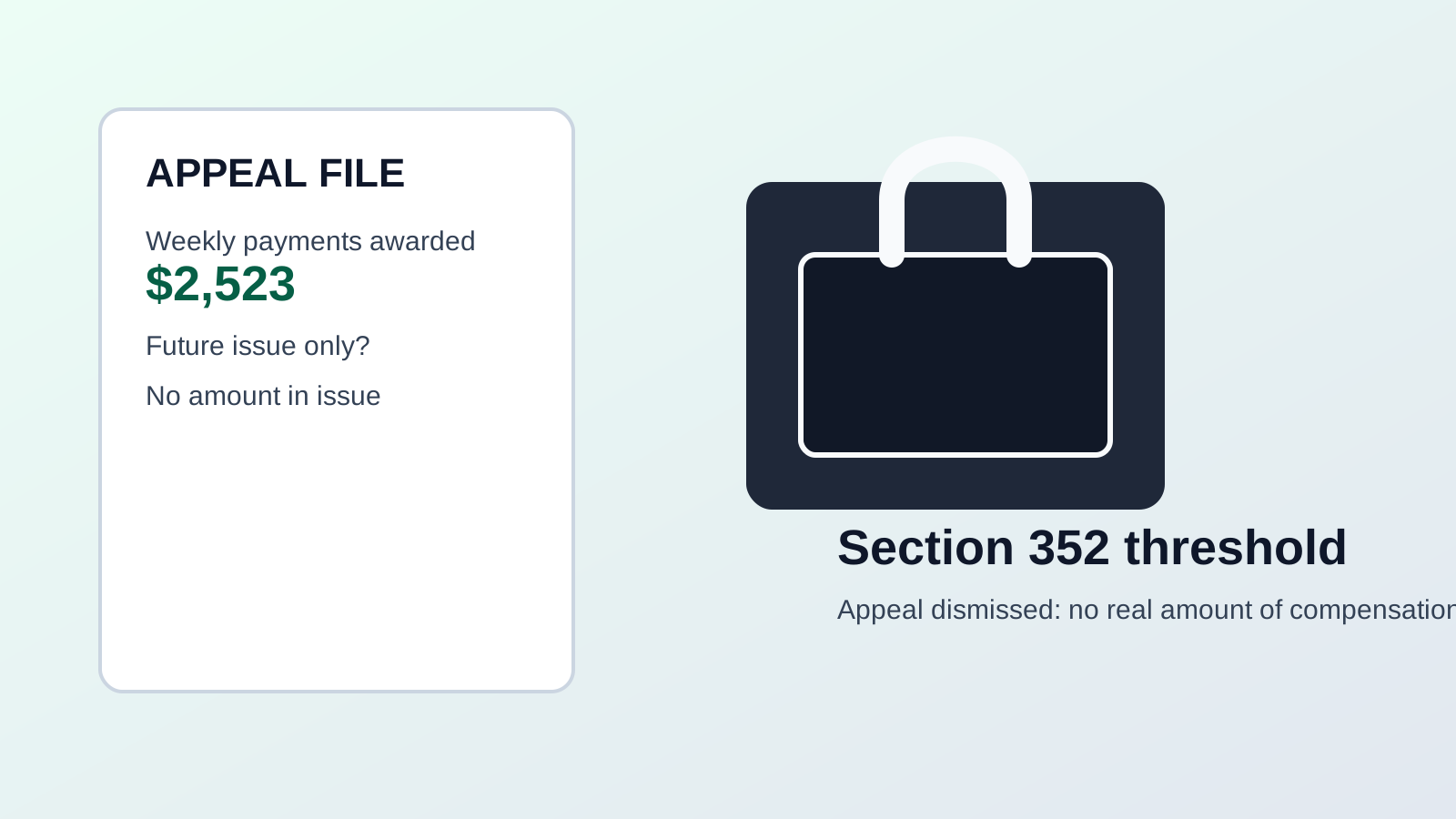
Brown matters because workers and lawyers sometimes focus on an adverse finding without checking whether the appeal legislation actually lets that finding be challenged. Here, the worker wanted to overturn a finding that a separate primary psychological injury had resolved, largely to avoid future problems around a possible permanent impairment claim. But the Presidential Member held that section 352 of the Workplace Injury Management and Workers Compensation Act 1998 was not satisfied because no actual amount of compensation was in issue on the appeal.
Case overview
- Forum: Personal Injury Commission of NSW, Presidential Member
- Decision date: 31 March 2026
- Decision-maker: Deputy President the Hon. Adam Searle
- Citation: Brown v Toll Transport Pty Ltd [2026] NSWPICPD 12
- Dispute type: Appeal threshold under section 352, weekly payments, accepted physical and consequential psychological injury, alleged separate primary psychological injury
Background facts
Mr Brown was a truck driver. It was accepted that he injured his eye after rubbing it with a hand contaminated by ammonium nitrate, and that he later developed a consequential psychological condition. Liability for those accepted injuries was not in dispute.
A separate contest arose over whether he also suffered a distinct primary psychological injury linked to bullying or treatment on his return to work. At first instance, the Member found that he had sustained that primary psychological injury, but that its effects had ceased before the weekly payments claim period began. The Member still awarded weekly compensation for the accepted eye injury and consequential psychological condition, including ongoing weekly payments.
What was in dispute?
The worker appealed on two grounds. He argued the Member made a factual error in finding the primary psychological injury had resolved, and a legal error in the way the Member approached the "untangling" exercise where more than one injury was involved.
The immediate problem was not really the merits of those arguments. It was whether the Commission had jurisdiction to hear the appeal at all. At a directions hearing the worker confirmed he was not challenging the amount of compensation awarded, and not challenging the kind or type of compensation awarded. The practical aim was to challenge the finding for future permanent impairment purposes, even though no permanent impairment claim based on that alleged primary psychological injury had been made in the original application.
The decision
Deputy President Searle dismissed the appeal. The core reasoning was that section 352 requires an appeal to affect an amount of compensation at issue on the appeal. The Commission treated "amount", "compensation" and "at issue" as having real work to do. It was not enough that the worker disliked a factual finding or wanted to improve the position for a possible later claim.
Because the worker did not challenge the weekly payments actually awarded, and had not advanced a permanent impairment claim in the underlying proceedings, success on appeal would not change the operative compensation result. The appeal was therefore outside the monetary threshold in section 352(3), and there was no right of appeal.
Why the case matters
Brown is useful because it separates two things that often get blurred together: a bad finding, and an appealable compensation dispute. From a claimant perspective, the lesson is not "do not appeal". The lesson is to make sure your appeal is tied to a real compensation consequence that is actually on foot in the proceeding.
That makes Brown important for matters involving weekly payments, section 66 lump sum compensation, and PIC appeal strategy. If a point only matters for some future hypothetical dispute, that may not be enough.
What to be aware of
- If you want to preserve a point for permanent impairment, think carefully about whether the claim itself needs to be pleaded or particularised in the primary proceedings.
- Appeals aimed only at correcting reasons or findings may fail if they do not affect the operative compensation outcome.
- Brown does not say adverse findings never matter. It says section 352 demands a genuine compensation amount in issue on the appeal.
- There may still be room to argue later that a future claim is not precluded by an earlier finding, but that is a different problem from appeal competence.
Key takeaways
- Section 352 is a real threshold, not a formality.
- An appeal must put an amount of compensation at issue.
- Challenging findings for strategic future reasons may not be enough.
- Workers should align pleading, evidence and appeal strategy early, especially where weekly payments and later WPI issues may overlap.
Related reading and internal links
If Brown raises questions about your own case, the strongest starting points are our guides to PIC disputes and appeals, weekly payments being stopped, no current work capacity, and section 66 lump sum strategy.
Schema suggestions
This page supports BlogPosting, WebPage and FAQ schema. Breadcrumb support would also be suitable if implemented consistently across the case-note section.
Frequently asked questions
Does Brown mean I cannot appeal an adverse finding unless money changes immediately?
Not exactly. It means the appeal must involve an actual amount of compensation at issue under section 352. A purely strategic challenge to reasons or findings may not be enough.
Can this affect a future permanent impairment claim?
Potentially yes, which is why the worker appealed. But Brown is a reminder that future strategic value does not automatically make an appeal competent.
Full decision source
Read the decision on AustLII: Brown v Toll Transport Pty Ltd [2026] NSWPICPD 12.
Related pages
Need help checking appeal strategy before time runs out?
A weakly framed appeal can fail before the merits are even reached. Get the dispute map checked early.